
We Need To Talk About This Maddening Trend Among Trump Voters That Will Make Your Blood Boil
"It’s hard to feel good about being right when being right means the worst-case scenario is actually happening."

In the aftermath of the shooting of Renee Nicole Good, there’s been a noticeable shift in attitudes among Americans.

The New York Times published an op-ed titled “The Resistance Libs Were Right.” Even Joe Rogan — widely credited as a podcasting ambassador who helped usher in the second Trump administration — has recently stepped back his more vocal support, culminating in asking, “Are we really going to be the Gestapo?” earlier this month.

This comes alongside a new Quinnipiac University poll that found that the majority of voters (53%) thought the shooting was “unjustified” and 57% of voters disapprove of “the way U.S. Immigration and Customs Enforcement, known as ICE, is enforcing immigration laws.”
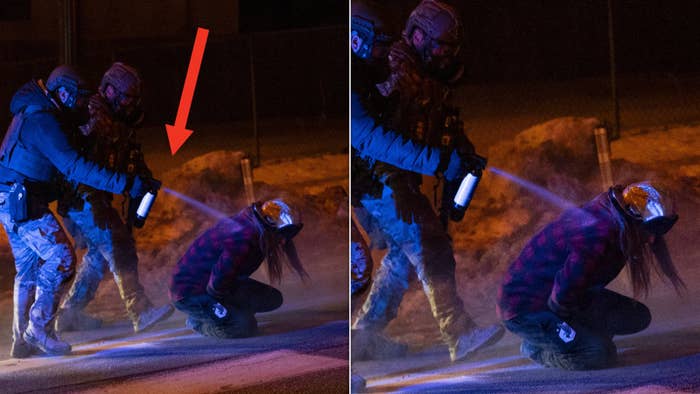
It’s a weird time for the individuals who have been vocally raising alarms since the previous Trump administration — and labelled “deranged” for it — who have the uncomfortable reality of being as unsurprised as they are horrified.
When it sure seems like your worst political anxieties came true ...

“When people ring alarm bells about the danger they see and others dismiss those fears, it can lead to increased feelings of despair, hopelessness and loneliness,” Melissa S. Tihinen, a licensed clinical social worker and therapist in New Jersey, told HuffPost.
The feeling that you “predicted” things getting this tumultuous is highly isolating, especially if your community and circle includes people who are less politically engaged than you (as any self-styled “blue dot in a red sea” on TikTok will tell you).
“I try to help my clients orient themselves to others who have been outspoken about the dangers of this administration,” Tihinen continued. “Even though the dismissive voices may have been louder or more prominent, there are so many people who have been consistently fighting against these dangers in ways that they can.”

As therapist Jeff Guenther (@TherapyJeff on social media) told HuffPost, there are some “brutal” consequences to being dismissed over and over again for having valid fears.
“It’s essentially a form of chronic stress that leads to hypervigilance,” Guenther said. “When the people around you, or the systems you rely on, tell you that your very real concerns are overreactions, you start to lose trust in your own internal compass.”
“This leads to a fried nervous system,” he continued. “You’re constantly scanning for the next threat because you’ve learned that nobody is going to believe you until the damage is already done. We see a lot of depression, a deep sense of isolation, and even symptoms of moral injury, where your sense of right and wrong is constantly being challenged by the people you’re supposed to be closest to.”
Of course, in less dire circumstances with lower stakes, the opportunity to unleash a righteous “I told you so” can be pretty gratifying. Like when you tell someone that a show you thought was going to suck did, in fact, suck, or when you said, “I think we should’ve taken the back roads instead of the highway,” and you run into stand-still traffic.
But there’s a stark difference between the benign things you were right about and having your worst anxieties realized at the cost of your neighbors. Tihinen notes that she would arguably classify what her clients in this headspace have been dealing with as something beyond “political anxiety” and more toward “political trauma.”
“They didn’t want an ‘I told you so’ moment,” Tihinen said. “They wanted to be taken seriously from the beginning and wanted others to be responsive to the danger they saw instead of waiting for all the harm, destruction and violence that has been inflicted in the last year.”
And, duh, you might be f**king angry.

Beyond that despair and isolation, anger is very much in the cocktail of sorrow people are experiencing right now, something Guenther says is “actually a rational response to the total breach of trust.”
“You’re mourning the fact that these people didn’t value your perspective or your safety until it was too late to prevent the damage,” he said. “It’s hard to feel good about being right when being right means the worst-case scenario is actually happening.”
“My clients who were ringing the alarm bells early felt they were trying to protect the fabric of this country, their neighbors and themselves. Although they are being validated in the news now, I think there’s a sense of anger, grief and frustration that they weren’t taken seriously to begin with,” Tihinen said. “There’s a sense of, ‘How did it have to get this bad for others to see how dangerous this administration is?’”
Tihinen does note that “processing their anger and frustration by embodying their feelings and validating parts of themselves to be very healing” for her clients dealing with this phenomenon.
“Also, I like to work with clients on trusting themselves and their instincts regardless of whether or not they are validated by others.”
Part of developing that self-trust is learning to trust your anger and what it has been trying to tell you: “The one thing I always want people to remember is that your anger is a protective force,” Guenther said. “It’s telling you that something isn’t right. Don’t let anyone, not even a therapist, shame you into ‘calming down’ if that calm feels like compliance. The goal isn’t to stop caring, it’s to care in a way that doesn’t destroy you.”
What about the people who said you were ‘overreacting’?

The folks coming out of the woodwork admitting that “you were right” can certainly bring up feelings that have been cooking for years as a result of the dismissive exchanges you’ve had with them.
“It’s about being gaslit by your friends and family for years. They called you dramatic, told you to get off Twitter, or said you were overreacting, and now they’re acting like they’re the ones who finally figured out things are bad,” Guenther said. “You’re not gloating because there’s nothing to celebrate. You’re exhausted because you’ve had to carry the truth alone while the people you love treated your valid concerns like an inconvenience.”

And that’s why he said he recommends those who are struggling with the “late bloomers” to this issue to “honor your resentment.”
“You don’t have to jump straight to being glad you’re finally on the same page. You’re allowed to be pissed that it took this much for them to see your humanity or the reality of the situation,” he said.
And that can manifest in a few ways, he said, but a good start can be setting boundaries and deciding that their edification is quite possibly neither your circus nor your monkeys.
“You don’t have to be their political tour guide or their emotional support person while they catch up,” he said. “If they’re suddenly realizing you were right, that’s great for them, but you’ve been carrying this weight for years. Take space. Validate yourself. You’re allowed to tell them that you’re glad they see it now, but you need time to process the hurt of being dismissed for so long before you can move forward.”
Ultimately, you need to take care of you (and your community) right now.

While there will be time to consider those relationships more later, your main focus has to be on not letting the despair win — which means doing the hard, disciplined and unsexy kind of self-care you learn about in therapy instead of giving way to your doomer impulses. (Think: less face masks and reposting Instagram graphics, more media hygiene and upholding those well-placed boundaries.)
And, unsurprisingly, both therapists think you might need to put your phone down just a little more.
“It seems that one tactic this administration is trying to use is to overwhelm those who resist so that they are ineffective,” Tihinen said. “I like to remind my clients that they also need to take care of their mental health in this political climate and that obsessively doomscrolling or watching the news 24/7 will likely overwhelm them and burn them out.
“I think one of the ways we can resist this administration is to take care of our well-being and resting so that we can continue to resist all that is wrong and dangerous.”
Guenther agrees, coming right for our collective “doomscrolling” habit. “We have to talk about doomscrolling. You feel like you’re staying informed, but you’re actually just keeping your brain in a state of high-intensity trauma,” he said. “You’re trying to gain a sense of control by consuming information, but the algorithm is designed to keep you terrified and hooked, not empowered.”
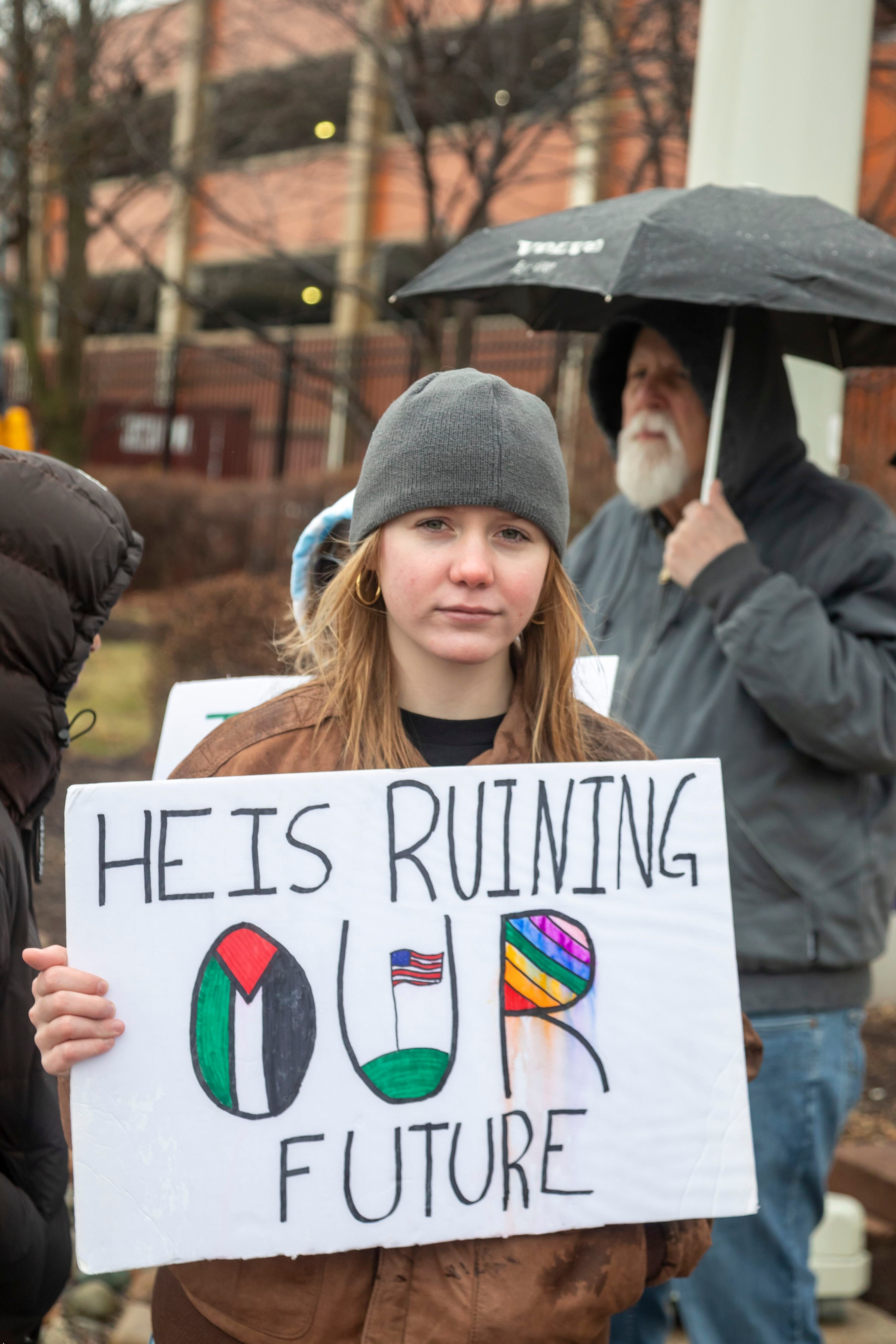
One suggestion he has is to look at ways to schedule your news intake, “maybe 20 minutes in the morning” and then getting out of the app and out into your real life instead of the thoughts of the 50 worst people online you do not know.
“Focus on community and local action,” he said. “Your nervous system wasn’t meant to hold the weight of the entire world’s suffering 24/7. Focus on what’s within your reach.”
Getting on the same page with your mental health provider is another important thing you can do, both Guenther and Tihinen emphasize. Having the support you need — and knowing that a session with your therapist is not going to further exacerbate the trauma — is highly necessary for people who have felt dismissed and gaslit over politics.
“As therapists, we can’t pretend the world isn’t on fire while we sit in the chair. The challenge now is shared reality. We’re often processing the same fears as our clients in real-time,” Guenther said. “It’s hard to tell a client they’re catastrophizing when the catastrophe is literally the morning headline. We have to be much more transparent about our values and how systems of oppression affect mental health.”
Not all providers are created equal in this way, so Guenther said that if you are seeking “support for political anxiety or trauma, you need to vet your provider like you’re hiring for a high-level position, because you are.”
That can also mean pushing back on the previously accepted ideas of “neutrality” that are usually standard in therapy spaces, according to Guenther: “Don’t be afraid to ask the hard questions in the first 15 minutes. Ask them how they handle political anxiety in the room or if they’re comfortable discussing how systemic oppression impacts mental health,” he said.
“A good fit means you don’t have to spend half your session explaining why a specific policy is terrifying,” he continued. “If they’re pushing a both-sides narrative or trying to neutralize your very valid fears, they’re probably not the right fit for this specific type of trauma. You want someone who validates your reality so you can actually get to the work of healing.”
This article originally appeared on HuffPost.


